What Are Single Leg Options Strategies?
Imagine you like a cricket bat priced at ₹1,000. You tell the shopkeeper, “I’ll pay ₹50 now to keep the right to buy it at ₹1,000 within 1 month.” If the bat’s price increases to ₹1,500, you’ll still buy it at ₹1,000. If the price drops to ₹800, you won’t buy it. You’ll just lose ₹50.
Let’s continue with Single leg options strategies which involves only one option leg – either buying or selling a Call or Put.
There are 4 basic strategies:
Long Call
Long Put
Short Call
Short Put
When it comes to options trading, understanding the greeks – Delta, Gamma, Theta, Vega, and Rho is critical for building effective strategies. So do check them out, also if you are beginner in options trading I would request you to first have Basic understanding of options ,Option moneyness , How to read option chain table.
Let’s explore single leg strategies one by one
LONG CALL – Buying a Call Option (Bullish Strategy)
When to Use: You think NIFTY or a stock will go UP.
How It Works: You pay a premium to buy the right to buy at a certain price (strike).
Example:
Underlying: NIFTY
Current Price: 22,000
You buy 22,100 Call for ₹100 (premium)
Lot Size: 50
Total Investment: ₹100 × 50 = ₹5,000
What Can Happen:
If NIFTY goes to 22,400:
Intrinsic Value = 22,400 – 22,100 = 300
Profit = (300 – 100) × 50 = ₹10,000
If NIFTY stays at or below 22,100:
You lose the entire premium = ₹5,000
Long Call Payoff Graph:
You Buy a Call Option (Bullish)

You lose maximum ₹5,000, but upside is unlimited.
Flat loss = premium paid (if price doesn’t rise)
Profit starts once price rises above Strike + Premium
Example:
Strike = 22,100
Premium = ₹100
Breakeven = 22,200
Unlimited upside above 22,200
Greeks Impact:
Delta: Positive (goes up as price rises)
Theta: Negative (you lose money as time passes)
Vega: Positive (you benefit from rise in volatility)
Do’s:
Buy calls only when you’re very bullish
Choose strikes just above current price (ATM/OTM)
Don’ts:
Don’t hold near expiry if price hasn’t moved
Don’t buy far OTM (like 500+ points away)
Pro Tip: Use weekly options for quick moves, monthly for more time cushion.
If you’re looking for a broker that offers speed, transparency, and advanced tools, Dhan is one of the best choices today. With zero brokerage on delivery trades and intuitive charts, Dhan is built for both beginners and pro traders. Invest in Stocks, F&O, Commodities, Currency, ETFs, Mutual Funds, SGBs, IPOs, SIPs and much more.
Click Here to Open Your Free Dhan Account
No paperwork. No account opening charges. Get started in 5 minutes! Dhan also offers advanced tools like TradingView & Options Trader built-in.
LONG PUT – Buying a Put Option (Bearish Strategy)
When to Use: You believe the market or a stock will fall.
How It Works: You buy the right to sell at a fixed price.
Example:
Stock: Reliance
Current Price: ₹2,900
Buy 2,850 Put for ₹60
Lot Size: 250
Investment = ₹60 × 250 = ₹15,000
What Can Happen:
Stock falls to ₹2,700:
Intrinsic Value = 2,850 – 2,700 = ₹150
Profit = (150 – 60) × 250 = ₹22,500
If stock stays above 2,850:
You lose the premium = ₹15,000
Long Put Payoff Graph:
You Buy a Put Option (Bearish)
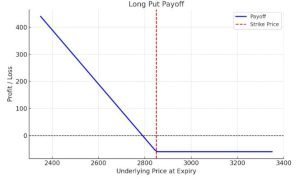
Fixed loss, high profit potential if price drops.
Max loss = premium paid
Profit starts when price falls below Strike – Premium
Example:
Strike = ₹2,850
Premium = ₹60
Breakeven = ₹2,790
Gains increase as price falls below ₹2,790
Greeks Impact:
Delta: Negative
Theta: Negative
Vega: Positive
Do’s:
Use if news or results may crash stock
Go ATM/just OTM for better probability
Don’ts:
Avoid deep OTM Puts
Don’t hold too close to expiry with no movement
Pro Tip: Puts are often underused in Indian markets – but great for shorting with limited risk.
SHORT CALL – Selling a Call Option (Bearish/Neutral Strategy)
When to Use: You think the stock/index won’t go up much.
How It Works: You receive a premium by selling a call but must sell at strike if required.
Example:
NIFTY at 22,000
Sell 22,200 Call for ₹70
Lot: 50
You receive ₹3,500 upfront
What Can Happen:
If NIFTY stays below 22,200:
You keep entire ₹3,500
If NIFTY moves to 22,500:
Loss = (22,500 – 22,200 – 70) × 50 = ₹11,500
Risk: Unlimited loss if market jumps
Short Call Payoff Graph:
You Sell a Call Option (Bearish/Neutral)

Limited profit (premium), unlimited risk.
Max profit = premium received
Loss is unlimited if price rises above strike
Warning:
Naked call selling is risky — avoid without a hedge.
Greeks Impact:
Delta: Negative
Theta: Positive (you benefit from time decay)
Vega: Negative
Do’s:
Sell Calls above resistance or far OTM
Use hedge/spread if you’re new
Don’ts:
Don’t sell naked calls in volatile market
Never sell ATM calls unless you’re hedged
Pro Tip: Sell calls only if you understand risk, or hedge with higher call.
If you’re looking for a broker that offers speed, transparency, and advanced tools, Dhan is one of the best choices today. With zero brokerage on delivery trades and intuitive charts, Dhan is built for both beginners and pro traders. Invest in Stocks, F&O, Commodities, Currency, ETFs, Mutual Funds, SGBs, IPOs, SIPs and much more.
Click Here to Open Your Free Dhan Account
No paperwork. No account opening charges. Get started in 5 minutes! Dhan also offers advanced tools like TradingView & Options Trader built-in.
SHORT PUT – Selling a Put Option (Bullish/Neutral Strategy)
When to Use: You believe stock/index won’t fall or will rise.
How It Works: You earn premium by selling a put, but must buy if price drops.
Example:
Reliance at ₹2,900
Sell 2,850 Put for ₹50
Lot: 250
Receive ₹12,500 upfront
What Can Happen:
If price stays above ₹2,850:
Keep full ₹12,500
If price falls to ₹2,700:
Loss = (2,850 – 2,700 – 50) × 250 = ₹25,000
Risk: Large loss if price crashes
Short Put Payoff Graph:
You Sell a Put Option (Bullish/Neutral)
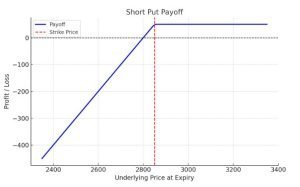
Limited profit, high loss potential
Max profit = premium received
Loss increases as price falls below strike
Example:
Strike = ₹2,850
Premium = ₹50
Breakeven = ₹2,800
Loss if stock falls below ₹2,800
Greeks Impact:
Delta: Positive
Theta: Positive (time decay helps)
Vega: Negative
Do’s:
Sell puts below support, not ATM
Use margin protection or hedge
Don’ts:
Don’t sell puts on earnings day
Avoid naked puts on weak stocks
Pro Tip: A great way to acquire stocks cheaper — if you’re okay owning the stock.
BASIC SINGLE LEG OPTIONS STRATEGIES CHEAT SHEET
Strategy | Market View | Risk | Reward | Ideal Strike | Time to Expiry |
|---|---|---|---|---|---|
Long Call | Bullish | Limited | Unlimited | ATM/OTM | 2–3 weeks |
Long Put | Bearish | Limited | High | ATM/OTM | 2–3 weeks |
Short Call | Bearish/Sideways | Unlimited | Limited (Premium) | Deep OTM | <1 week |
Short Put | Bullish/Sideways | High | Limited (Premium) | Deep OTM | <1 week |
Greek Summary Table
Strategy | Delta | Theta | Vega |
|---|---|---|---|
Long Call | +ve | –ve | +ve |
Long Put | –ve | –ve | +ve |
Short Call | –ve | +ve | –ve |
Short Put | +ve | +ve | –ve |
Risk Reward Summary Table
| Strategy | Graph Shape | Risk | Reward |
|---|
| Long Call | Starts flat, slopes up | Limited | Unlimited |
| Long Put | Starts flat, slopes down | Limited | High |
| Short Call | Flat then slopes down | Unlimited | Limited (Premium) |
| Short Put | Flat then slopes down | High | Limited (Premium) |
Conclusion: Start with the Basics, Trade Smart!
Single-leg strategies are the foundation of options trading. Once you master them, you can move to spreads and combos. Start small, understand risk-reward, and never trade without a reason.
For recap
Long Call – Profit when the market goes up
Long Put – Profit when the market goes down
Short Call – Earn premium if market stays below strike
Short Put – Earn premium if market stays above strike
💡 If you’re just starting, begin with buying options (calls or puts) to keep your risk limited.
Please do not just speculate while trading in stock market in any segment, instead look for learning new strategies such as
Call Butterfly Spread Strategy
Call Ratio Back Spread Strategy
Disclaimer:
This content is intended for educational purposes only and does not constitute financial or investment advice. Options trading involves substantial risk and may not be suitable for all investors. Past performance is not indicative of future results. Always do your own research or consult a SEBI-registered financial advisor before making any trading decisions. The examples provided are for illustration only and do not represent any recommendations.